Get an official forecast
In the United States, the National Weather Service (NWS) issues forecasts, watches and warnings. On weather.gov you can enter a place name or click a map to get a point forecast for a specific spot, which is more useful for a trail than the forecast for the nearest town. Mountains, canyons and coasts can have very different weather from the valley a few miles away.
- Check the forecast the day before and again on the morning of the hike.
- Look at the hourly forecast for wind, the chance of thunderstorms and temperatures across the day.
- Read any watches, warnings or advisories, such as heat, flood, wind or winter storm alerts.
- Check the park or forest website too. Many post weather-related closures, fire danger and trail conditions.
Thunderstorms and lightning
The NWS says there is no safe place outdoors when a thunderstorm is nearby. Its advice is summed up in the phrase "When thunder roars, go indoors." On a trail you may be far from a building or car, so the best protection is planning:
- In many mountain areas, summer thunderstorms often build in the early afternoon. Start early so you are off summits and ridges before then.
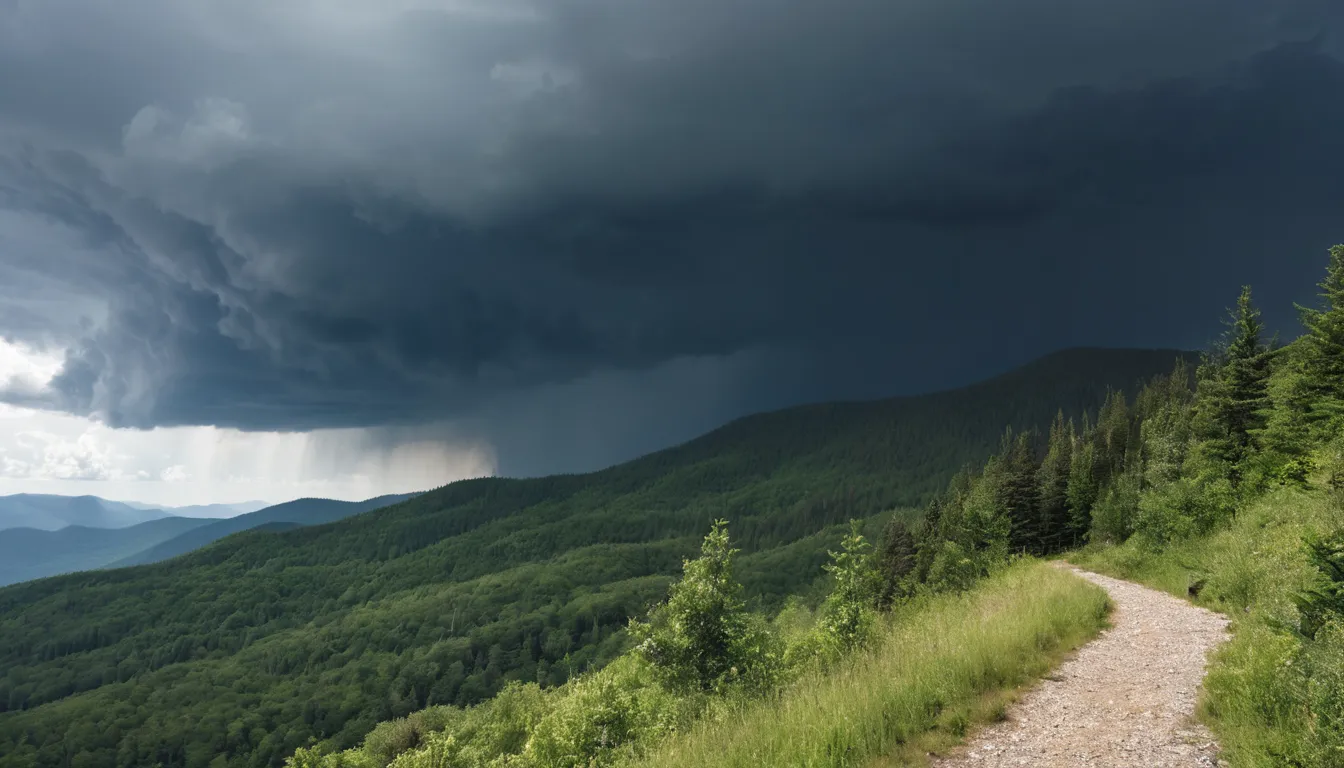
- Watch the sky. Clouds that tower upward and darken are a sign to head down.
- If you hear thunder, leave high ground, open areas and isolated tall trees, and head toward lower, sheltered ground and your car.
The NWS lightning safety pages explain what to do if you are caught outside.
Heat
Hot weather makes hiking harder and raises the risk of heat illness. Start early, rest in the shade, carry and drink plenty of water, and wear light, loose clothing and a hat. Signs of heat exhaustion include heavy sweating, weakness, dizziness, nausea and headache. Stop, get into shade, cool down and drink water. Confusion, fainting or very hot skin can mean heat stroke, which is a medical emergency. Call 911.
Cold, wet and wind
Hypothermia doesn't need freezing temperatures. Rain, sweat and wind can chill you on a mild day, especially once you stop moving. Air also tends to get colder as you climb, so the top of a trail can be much cooler and windier than the parking lot. Carry a warm layer and a rain jacket, put them on before you get cold, and change out of wet layers when you can. Shivering, clumsy hands and confusion are signs to get warm and dry and head out.
Other conditions to check
| Condition | Why it matters | Where to check |
|---|---|---|
| Flash floods | Narrow canyons and dry washes can flood from rain miles away | NWS flood alerts and park alerts |
| Snow and ice | High trails can hold snow into summer, making them slippery and hard to follow | Park or forest trail conditions |
| Smoke and air quality | Wildfire smoke can make breathing hard during exercise | Official air quality reports and local alerts |
| Short days | Fall and winter days leave less time to finish | Sunset time for the date and place |
When to change plans
Have a backup: a shorter trail, a lower route or another day. If the forecast looks doubtful, choose the shorter option. On the trail, turn back if the weather turns, even if the hike was going well. The trail will still be there next weekend. The trail safety guide covers what to do if things go wrong.